
Your Garage Door Springs Are Doing More Work Than You Think
Most homeowners in Moody don't think much about their garage door springs — until one breaks. That sudden, loud bang in the garage followed by a door that won't open is a wake-up call that catches people off guard. But the truth is, garage door springs are the hardest-working component of your entire garage door system, and they have a finite lifespan.
Understanding how long your springs should last, what affects their longevity, and how to spot the warning signs of wear can save you from unexpected breakdowns, costly emergency repairs, and even potential safety hazards. Let's break it all down.
What Do Garage Door Springs Actually Do?
Your garage door is heavy — most residential doors weigh between 130 and 350 pounds depending on the material and size. The springs are responsible for counterbalancing that weight so your opener (or your arms, if you're operating it manually) doesn't have to do all the lifting.
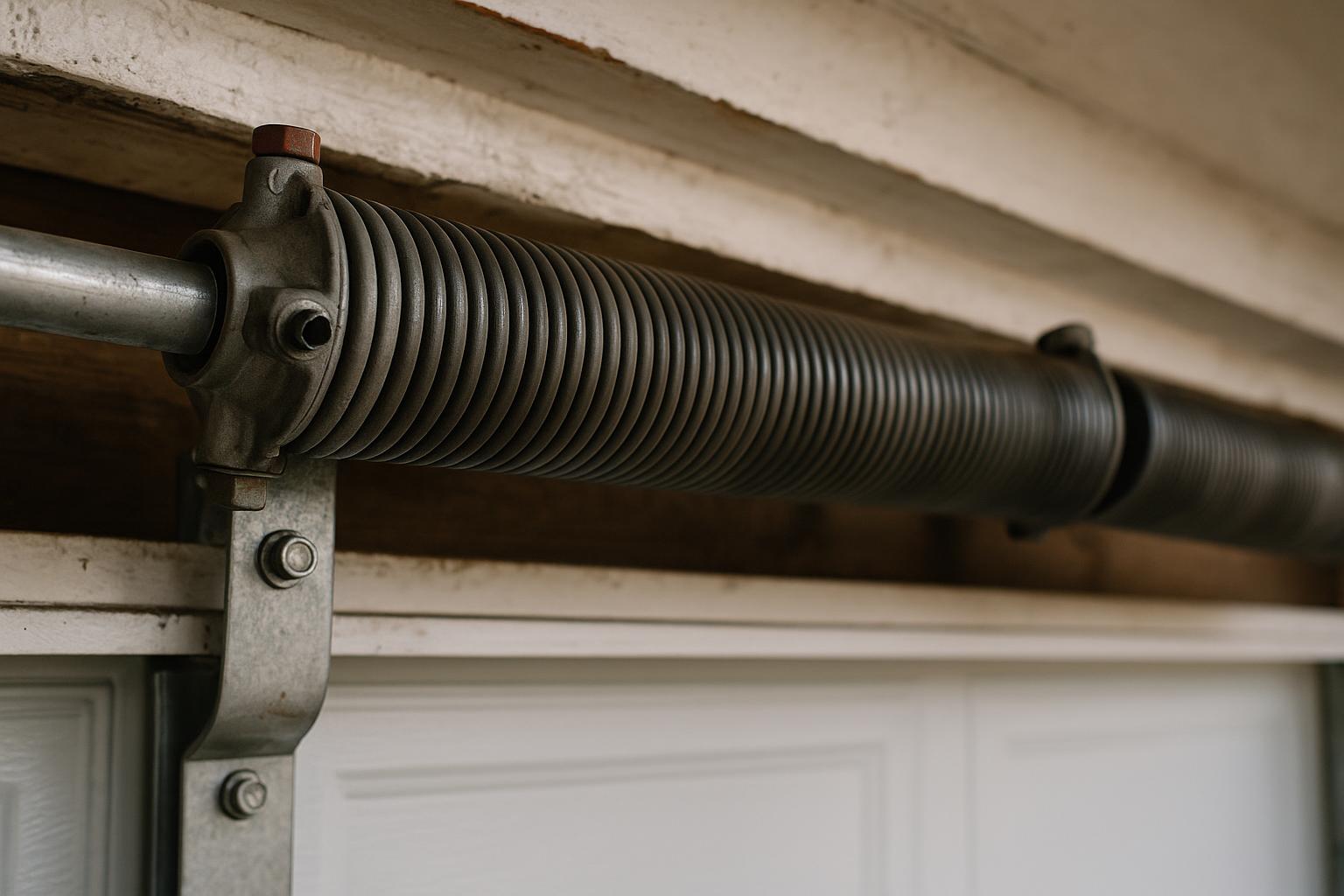
There are two main types of garage door springs:
- Torsion springs — These are mounted on a metal shaft above the door opening. They use torque to lift the door and are the more common type found in modern garage door systems.
- Extension springs — These run along the horizontal tracks on either side of the door. They stretch and contract to assist with lifting. They're more common on older or lighter doors.
Both types are under extreme tension, which is why spring replacement is one of the most dangerous garage door repairs to attempt without professional training and tools.
How Long Do Garage Door Springs Typically Last?
The lifespan of a garage door spring is measured in cycles. One cycle equals one full open-and-close of the door. Most standard torsion springs are rated for approximately 10,000 cycles. If you open and close your garage door four times a day, that works out to roughly seven years of use.
However, there are higher-cycle springs available — 20,000, 25,000, and even 50,000-cycle options — that can significantly extend the time between replacements. When we install or replace springs for homeowners here in Moody, we always discuss the different cycle ratings so you can choose the option that fits your budget and usage habits.
Factors That Affect Spring Lifespan
Several things can shorten or extend the life of your garage door springs:
- Frequency of use — A family that uses the garage as the primary entrance to the home will cycle the door far more than someone who only opens it occasionally.
- Climate and humidity — Here in Alabama, our warm and humid conditions can accelerate rust and corrosion on metal springs, weakening them over time.
- Maintenance — Springs that are regularly lubricated and inspected tend to last longer than those that are neglected.
- Proper installation — Springs that are correctly sized and balanced for your specific door will wear more evenly and last closer to their rated cycle life.
- Door balance — If your door is out of balance, the springs are working harder than they should, which accelerates wear.
Warning Signs Your Springs Are Wearing Out
Springs rarely fail without giving some warning signs first. Knowing what to look for can help you schedule a replacement before you're stuck with a door that won't open on a Monday morning when you need to get to work.
1. The Door Feels Heavier Than Usual
Try disconnecting your opener and lifting the door manually. A properly balanced door with healthy springs should lift smoothly and feel relatively light. If it feels noticeably heavy or difficult to raise, your springs are likely losing tension.
2. The Door Doesn't Stay Open
When you manually lift the door to about the halfway point and let go, it should stay in place. If it slides back down, the springs aren't providing enough counterbalance anymore.
3. Visible Wear or Rust
Take a look at your springs. Do you see rust, corrosion, or areas where the coils appear stretched or uneven? These are signs of deterioration. A light coat of garage door lubricant applied a few times a year can help prevent rust, but once significant corrosion sets in, replacement is the safest option.
4. The Door Opens Unevenly
If one side of the door rises faster than the other, or if the door looks crooked during operation, one spring may be weaker than the other. This is especially common with extension spring systems that have a spring on each side.
5. Loud Squeaking or Grinding
While some operational noise is normal, excessive squeaking, grinding, or popping sounds during operation can indicate that your springs are straining under the load.
6. A Gap in the Spring Coils
This is the most obvious sign — if you see a visible gap or separation in the coils of a torsion spring, it has already broken. Do not attempt to operate the door. Call a professional immediately.
Should You Replace One Spring or Both?
This is one of the most common questions we get from customers in the Moody and Trussville area. If your door has two torsion springs and one breaks, should you replace just the broken one?
Our recommendation is almost always to replace both springs at the same time. Here's why: if one spring has reached the end of its lifespan, the other one is likely not far behind. Replacing both ensures even balance and performance, and it saves you from paying for a second service call in a few months when the other spring inevitably fails.
Why Spring Replacement Is Not a DIY Job
We understand the appeal of handling home repairs yourself — it saves money and there's a sense of accomplishment in it. But garage door spring replacement is one job we strongly advise leaving to trained professionals. The springs are under an enormous amount of tension, and improper handling can result in serious injury or even death.
Professional technicians have the specialized tools, training, and experience to safely remove old springs and install new ones that are properly sized and calibrated for your specific door. The cost of professional spring replacement is modest compared to the risk of a DIY attempt gone wrong.
How Preventive Maintenance Extends Spring Life
One of the best things you can do to get the most life out of your garage door springs is to invest in regular preventive maintenance. A basic maintenance routine includes:
- Lubricating the springs — Use a silicone-based or lithium-based garage door lubricant on the springs two to three times per year. This reduces friction and helps prevent rust.
- Checking door balance — Periodically test the balance of your door by disconnecting the opener and manually lifting the door halfway. If it doesn't hold position, have a technician inspect the springs.
- Visual inspections — Look for signs of rust, wear, or gaps in the coils every few months.
- Professional tune-ups — Having a technician inspect and adjust your springs, cables, and hardware once a year can catch small problems before they become big ones.
At Moody Garage Door Works, we offer preventive maintenance services designed to keep your entire garage door system running smoothly and help you avoid unexpected breakdowns.
Don't Wait for the Bang
If your garage door springs are more than five or six years old, or if you've noticed any of the warning signs we've discussed, it's worth having them inspected. A proactive replacement on your schedule is always better than an emergency repair on a weekend or holiday.
Whether you're in Moody, Odenville, Leeds, or any of the surrounding communities, Moody Garage Door Works is here to help with honest assessments and dependable service. Give us a call and let's make sure your garage door springs are ready for the long haul.