
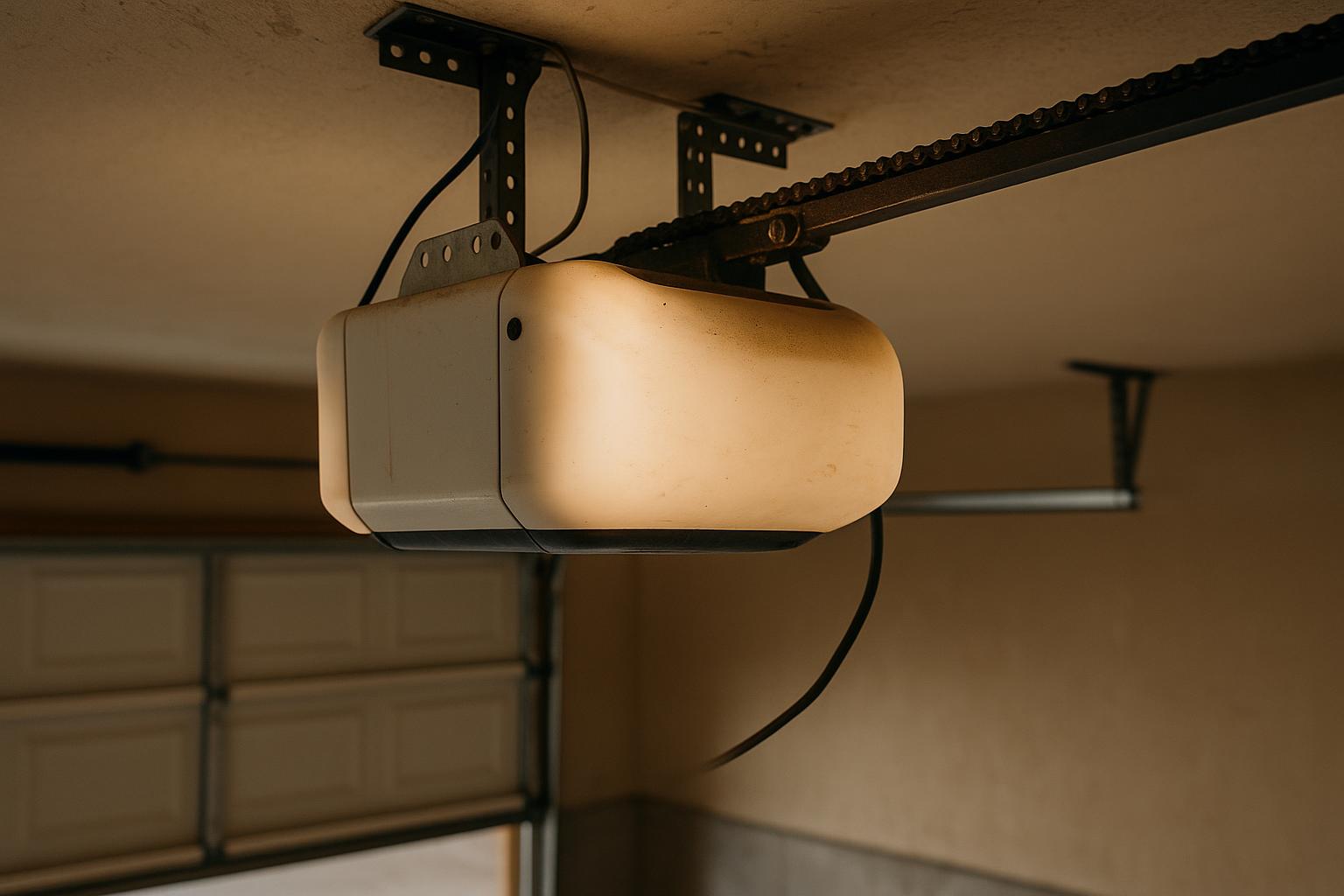
Your Garage Door Opener Is Trying to Tell You Something
Most homeowners in Moody don't think much about their garage door opener until it stops working entirely. But the truth is, openers rarely fail without warning. There are almost always signs leading up to a breakdown — subtle changes in how the door moves, sounds you haven't heard before, or inconsistent behavior that's easy to dismiss.
If you catch these warning signs early, you can often avoid getting stuck with a door that won't open on a cold morning when you're already running late. Here's what to watch for and what your options are when your opener starts showing its age.
How Long Do Garage Door Openers Typically Last?
A well-maintained garage door opener generally lasts between 10 and 15 years, though some higher-end models can push past that. Several factors affect lifespan, including:
- Frequency of use — A family that opens and closes the door six or more times a day will wear out an opener faster than someone who uses it twice.
- Quality of the unit — Entry-level openers with lighter-duty motors tend to have shorter lifespans.
- Maintenance habits — Openers that are never lubricated, adjusted, or inspected will deteriorate faster.
- Climate and environment — Here in central Alabama, our humid summers can take a toll on electrical components and metal parts over time.
If your opener is approaching the 10-year mark, it's worth paying closer attention to how it's performing.
7 Warning Signs Your Garage Door Opener Is Failing
1. The Door Moves Slower Than Usual
If your garage door has started creeping up or down noticeably slower than it used to, the opener motor may be losing power. While a slow door can sometimes be caused by track or spring issues, a worn-out motor is one of the more common culprits — especially in older units.
2. Excessive or Unusual Noise
All garage door openers make some noise, but there's a difference between normal operational sound and grinding, straining, or rattling that wasn't there before. Chain-drive openers are naturally louder than belt-drive models, but if your opener has gotten significantly louder over time, internal components may be wearing out.
3. Intermittent Operation
Does your opener work fine sometimes but refuse to respond other times? If you've already replaced the remote batteries and the wall button also acts up, the problem likely lies in the opener's logic board or internal wiring. Intermittent operation is one of the most frustrating symptoms because it makes the problem hard to pin down.
4. The Door Reverses or Stops Mid-Cycle
While we've covered reversing issues related to sensors and alignment in a previous post, an opener that frequently stops or reverses during operation — even when the sensors are clean and aligned — may have a failing motor or circuit board. The opener may be struggling to generate enough force to complete the cycle.
5. Vibration During Operation
A garage door opener that vibrates excessively or shakes on the ceiling mount is showing signs of internal wear. Loose mounting hardware can sometimes cause this, but if tightening everything doesn't solve it, the motor or drive mechanism may be on its way out.
6. The Opener Runs But the Door Doesn't Move
If you hear the motor running but the door stays put, the gear or drive assembly inside the opener has likely stripped or broken. This is a common failure point in older openers, particularly those with plastic gears. In some cases, the gears can be replaced individually, but if the unit is old, a full replacement often makes more financial sense.
7. Your Opener Lacks Modern Safety Features
This isn't exactly a malfunction, but it's worth mentioning. Openers manufactured before 1993 may not have auto-reverse functionality or photoelectric sensors — both of which are now required safety features. If your opener predates these standards, replacing it isn't just about convenience. It's about keeping your family safe.
Should You Repair or Replace Your Opener?
This is the question we get asked most often by homeowners in Moody and the surrounding areas like Trussville, Leeds, and Odenville. The answer depends on a few factors:
When Repair Makes Sense
- The opener is less than 8 years old
- The issue is isolated — a single gear, a capacitor, or a logic board
- The repair cost is less than half the price of a new unit
- The opener still has modern safety features
When Replacement Is the Better Investment
- The opener is 10 years old or older
- You're dealing with multiple symptoms at once
- Replacement parts are discontinued or hard to find
- The unit lacks auto-reverse or sensor safety features
- You want quieter, more reliable operation with smart-home compatibility
Today's garage door openers offer significant upgrades over models from even five or six years ago. Belt-drive openers run whisper-quiet, battery backup systems keep your door working during power outages, and Wi-Fi-enabled models let you monitor and control your garage door from your phone — handy if you've ever driven halfway to Springville before wondering whether you closed the garage.
What to Expect During an Opener Replacement
If you decide it's time for a new opener, the process is more straightforward than most people expect. A professional installation typically takes two to three hours and includes:
- Removing the old opener and mounting hardware
- Installing the new unit and connecting it to your existing door
- Programming remotes and wall controls
- Setting force and travel limits so the door opens and closes correctly
- Aligning safety sensors and testing all safety features
- Walking you through the new system's features and operation
We always recommend professional installation rather than DIY for opener replacements. Improper installation can lead to premature wear, safety hazards, and voided manufacturer warranties.
A Quick Maintenance Tip to Extend Your Opener's Life
One of the simplest things you can do to help your opener last longer is to keep the rest of your garage door system in good shape. When springs, rollers, or tracks are worn or misaligned, the opener has to work harder to move the door. That extra strain adds up over months and years, shortening the motor's lifespan considerably.
An annual preventive maintenance visit can catch these issues early and take unnecessary stress off your opener. It's a small investment that pays off in fewer emergency repairs down the road.
Need Help With Your Garage Door Opener in Moody?
Whether your opener is making strange noises, acting unpredictably, or has stopped working altogether, Moody Garage Door Works is here to help. We serve homeowners throughout Moody, Odenville, Leeds, Trussville, Springville, and Pell City with honest assessments and dependable service. We'll tell you whether a repair will get you back on track or whether it's time to invest in a new unit — and we'll never push you toward a replacement you don't need.
Give us a call to schedule a diagnostic visit. We'll get your garage door working reliably again so you can stop worrying about it and get on with your day.