
A Frustrating Problem That's More Common Than You Think
You press the button on your garage door remote, the door starts its descent, and then — just inches from the ground — it reverses and goes right back up. You try again. Same thing. Maybe it works on the third try, maybe it doesn't. Either way, you're left standing in your driveway in Moody wondering what's going on.
This is one of the most common garage door complaints we hear at Moody Garage Door Works, and the good news is that it usually has a straightforward explanation. The bad news? Ignoring it can lead to bigger problems down the road. Let's walk through the most likely causes and what you can do about each one.
Understanding Why Your Garage Door Reverses
Modern garage door openers are equipped with two key safety systems mandated by federal law since the early 1990s. These systems are designed to prevent the door from closing on a person, pet, or object. When your door reverses unexpectedly, one of these safety mechanisms is almost always involved.
1. Misaligned Safety Sensors
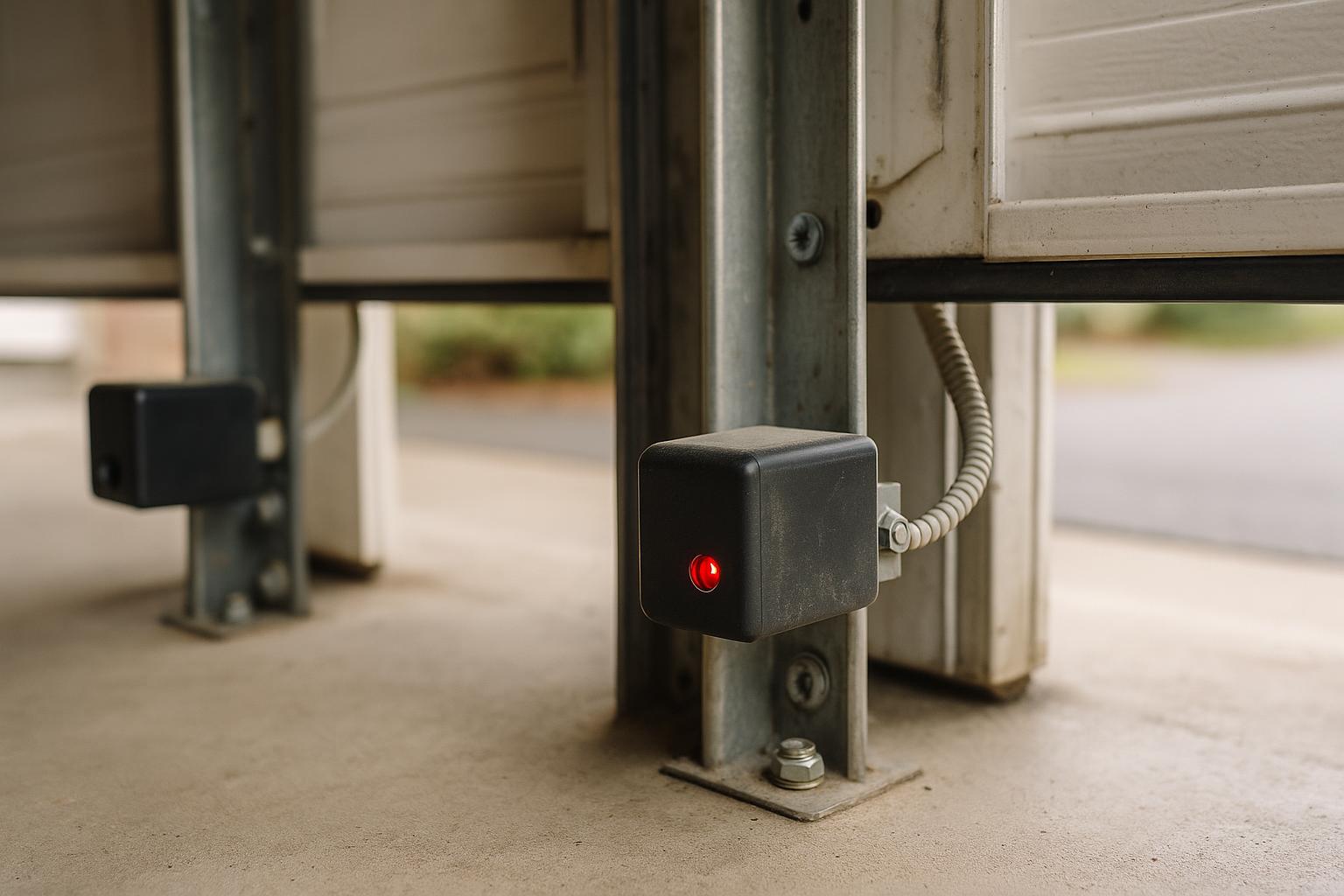
This is the number one reason garage doors reverse before closing completely. Your garage door has two small photo-eye sensors mounted near the bottom of the door tracks on either side. One emits an infrared beam, and the other receives it. When the beam is unbroken, the door knows the path is clear. When something interrupts the beam — or when the sensors are out of alignment — the opener interprets it as an obstruction and reverses the door.
Here's what to check:
- Look at the indicator lights on both sensors. Typically, one will have a steady green light and the other a steady amber or green light. If either light is blinking, the sensors are likely misaligned.
- Clean the lenses. Dust, cobwebs, and dirt accumulate on sensor lenses over time. A quick wipe with a soft cloth can solve the problem instantly.
- Check for obstructions. A broom handle leaning against the wall, a trash can slightly out of place, or even a leaf blowing through at the wrong moment can trigger the sensors.
- Inspect the wiring. Over time, the thin wires running from the sensors to the opener can become frayed, especially if they've been nicked by yard tools or chewed by pests.
2. The Close-Force Setting Needs Adjustment
Your garage door opener has a force setting that determines how much resistance the motor will push through before reversing. If this setting is too low, the door may interpret normal contact with the ground as hitting an obstruction. Seasonal changes here in central Alabama — where humidity and temperature swings can cause wooden door frames to expand and contract — can make this problem come and go throughout the year.
Most openers have adjustment screws or dials on the back or side of the motor unit labeled "force" or "close force." A small clockwise turn increases the downward force. However, be cautious — setting the force too high defeats the purpose of the safety mechanism. If you're unsure, it's best to have a professional handle this adjustment.
3. Damaged or Worn Tracks
If your garage door tracks are bent, dented, or have accumulated debris, the door can bind or stick as it travels downward. When the opener senses this extra resistance, it reverses. Walk along both tracks and look for visible damage, rust buildup, or areas where the track has shifted away from the wall. In older homes around Moody and Odenville, we frequently see tracks that have loosened from their mounting brackets over the years.
4. Broken or Worn Rollers
The rollers that guide your door along the tracks can crack, chip, or seize up over time. When a roller isn't spinning freely, it creates friction that the opener reads as resistance. Nylon rollers tend to last longer and run more quietly than steel ones, but both types eventually wear out. If you hear grinding or scraping noises when the door moves, worn rollers are a likely culprit.
5. Problems with the Garage Door Opener Logic Board
In some cases, the opener's internal circuit board can malfunction. Power surges — common during Alabama's spring and summer storm season — can damage sensitive electronics. If you've checked everything else and the door still reverses, the logic board may need to be replaced. This is definitely a repair best left to a qualified technician.
What You Can Safely Do Yourself
Some of these issues are simple enough for a handy homeowner to address:
- Clean the sensor lenses with a soft, dry cloth.
- Realign the sensors by gently adjusting them until both indicator lights are steady.
- Remove any obstructions from the door's path and the area around the sensors.
- Visually inspect the tracks for obvious damage or debris and clear away anything you find.
These steps take just a few minutes and resolve the problem in many cases.
When to Call a Professional
If your troubleshooting doesn't fix the issue, or if you notice any of the following, it's time to call in help:
- The door reverses and makes unusual noises like popping, grinding, or snapping
- You see frayed cables or broken springs
- The tracks are visibly bent or separated from the wall
- The opener runs but the door doesn't move at all
- You smell burning or notice the motor is hot to the touch
Garage door systems operate under extreme tension, particularly the springs and cables. Attempting to repair these components without proper training and tools can result in serious injury. We've seen homeowners in Leeds, Trussville, and Springville try DIY spring repairs that ended with costly damage to the door and the surrounding structure.
Preventive Maintenance Goes a Long Way
The best way to avoid the reversing-door headache — along with most other garage door problems — is regular preventive maintenance. At Moody Garage Door Works, we recommend having your system inspected at least once a year. During a maintenance visit, we lubricate moving parts, check spring tension, test safety sensors, tighten hardware, and inspect tracks and rollers for wear.
Think of it like an oil change for your garage door. A small investment in maintenance prevents expensive emergency repairs later. This is especially important for families in Moody and the surrounding Pell City area where the garage door often serves as the primary entry point to the home and gets used multiple times a day.
Don't Let a Reversing Door Become a Bigger Problem
A garage door that won't stay closed is more than an inconvenience — it's a security risk and an invitation for pests, weather, and unwanted visitors. If you've tried the basic troubleshooting steps above and the problem persists, give us a call at Moody Garage Door Works. We serve homeowners throughout Moody, Odenville, Leeds, Trussville, Springville, and Pell City with honest diagnostics and dependable repairs. No upselling, no pressure — just straightforward solutions to get your door working the way it should.